Duration changes the story.
Checking off reading does not show whether you read for five minutes or fifty. HabitSpark keeps that context visible.
 HabitSpark Download on the App Store App Store
 Habit timer
HabitSpark tracks the time behind your routines, so a short session and a long session do not collapse into the same checkmark.
Use the timer for one real routine today, then check History to see the time behind it.
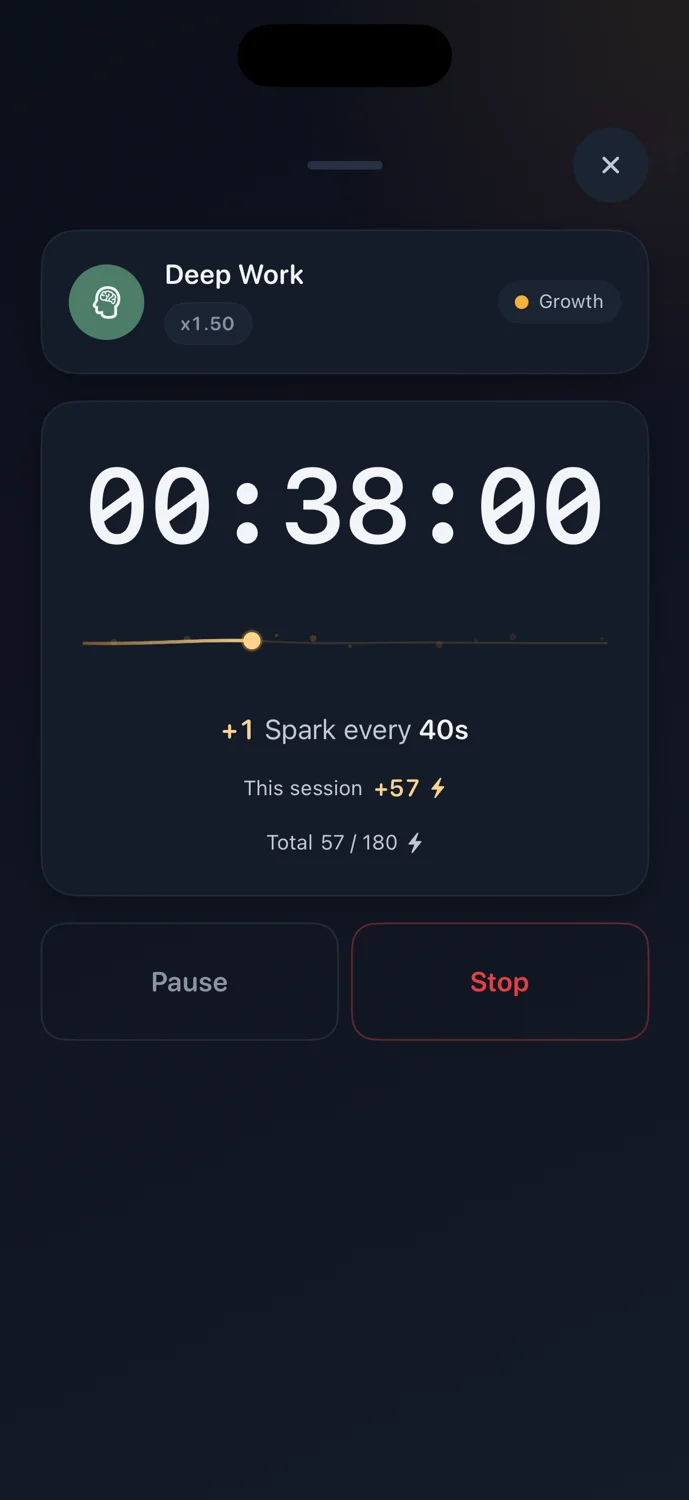
Checking off reading does not show whether you read for five minutes or fifty. HabitSpark keeps that context visible.
Growth timers add Spark. Leisure timers spend Spark. Each activity's Multiplier controls how strongly that time changes the balance.
Why time matters
If reading, study, or deep work can happen in very different lengths, a timer gives your routine more honest context than a done/not-done checkbox.
Multiplier
A Multiplier lets each activity affect Spark at its own rate, so a minute of one activity does not have to equal a minute of every other activity.
Duration-based routine
Start a Reading timer when you sit down, or quick log the session before bed if you forgot. HabitSpark keeps the minutes visible so your routine is measured by time, not just a yes/no checkmark.
What HabitSpark does
HabitSpark supports live timers, quick logs, History, activity types, and duration-based Spark changes.What HabitSpark does not do
HabitSpark is not a simple checkbox tracker, automatic time tracker, or fixed routine scheduler.How it works
Choose the activity you want to time from your list.
Use a live timer or quick log after the fact.
HabitSpark records the time and applies the activity's Multiplier when it updates your balance.
FAQ
Yes. Quick logs let you add a session afterward so useful time is not lost just because you forgot to start a live timer.
No. Multipliers are part of the core activity model, so you can tune how activities affect Spark without Pro.
HabitSpark
HabitSpark is for routines where minutes matter more than checkmarks.